Monday, 21 February 2011

Questions of Identity

I've been part of a conspiracy recently...

A book has been in production to honour Brian Haymes, and yesterday was the day when some of us who have contributed chapters made our way to Manchester to surprise Brian with a formal presentation.

He was preaching at his home church in Didsbury, and emerged from the vestry to be confronted with several rows of family and friends who had come for the occasion. One he had got over the shock, and realised that he had not in fact gatecrashed his own funeral, Ruth Gouldbourne and Alan Kreider offered some words of appreciation for Brian's ministry and friendship, and then presented him with a copy of the book. Anthony Cross also spoke as co-editor of the volume with Ruth, and Sean Winter sent a video message.


Brian then recovered sufficiently to preach on the first two chapters of Jonah, reminding us that there is nowhere we can go to escape the presence of God. He also said that Jonah was in his top three amusing biblical books, which left me wondering what the other two are...? (Leviticus?) It was a privilege to receive his ministry once again, and I am reminded why it is that I frequently tell people that he is the greatest Baptist preacher I have ever heard.

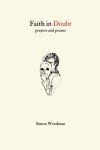
Here is the cover of the book (click to enlarge):


Here is the blurb:

Throughout the Baptist tradition issues of Baptist identity are being explored and widely debated. The Rev. Dr Brain Haymes is the former Principal of Northern and Bristol Baptist Colleges, and President of the Baptist Union of Great Britain. He has lectured widely and influenced many contemporary discussions of Baptist life and thought in Britain and further afield. He has been a great encourager of both established and younger scholars and ministers, and this collection of essays takes up themes in his many and various writings. Not only is it fitting to honour one of our leading Baptist pastor-scholars, but also to explore issues of widespread importance to Baptists in the early twenty-first century.


Contributors are: Faith Bowers, John E. Colwell, Anthony R. Cross, Paul S. Fiddes, Barry Harvey, Stephen R. Holmes, Ruth Gouldbourne, Alan Kreider, Robert Parkinson, Michael J. Quicke, Christopher Rowland, Sean F. Winter, Simon Woodman, and Nigel G. Wright.


Commendations:
‘Brian Haymes’ ministry epitomises the very best of the tradition of the scholar-pastor, moving easily between the worlds of seminary and pastorate. Here an international team of authors in articles, both searching and relevant, pay tribute to a man who has himself done so much to enrich our understanding of Baptist identity, here explored in splendid diversity.’
John H.Y. Briggs is Professor Emeritus, the University of Birmingham, and Research Professor, the International Baptist Theological Seminary, Prague


‘These essays provide a rich combination of scholarly and pastoral insight, a most appropriate tribute to a Baptist whose long ministry has testified to the dual importance of rigorous academic study allied to the actual practice of ministry. But they are also immensely worth reading in their own right as examples of lively engagement with biblical, historical and theological issues stimulated by our current questions of religious identity.’
Keith W. Clements is a writer, and former Tutor at Bristol Baptist College, Co-ordinating Secretary for International Affairs, Council of Churches for Britain and Ireland, and General Secretary of the Conference of European Churches


‘This Festschrift honours a much treasured scholar, Baptist minister and personal friend, Brian Haymes. Its chapters explore many of the passions that have shaped his distinguished ministries as preacher, pastor and theological educator. They properly reflect the richness of Brian’s contribution to Baptist and wider ecumenical life, and are themselves good examples of the scholarship to which he has been so deeply committed.’
Richard L. Kidd is Co-Principal of the Northern Baptist Learning Community in Manchester


‘Baptists around the world have been fortunate to call Brian Haymes their teacher and friend. Now some of them are honouring him by giving a gift to all Baptists. These essays will inspire and instruct Baptists, and extend Brian’s work in the process. They reflect those subjects that have animated his thought and work: scripture and its interpretation; sacramentality; proclamation; morality; education; Anabaptism; and conscience. In so doing, they offer a winsome picture of Baptist identity, issuing a call to live Christian life at full stretch, growing as persons and communities into the fullness of Christ.’
Philip E. Thompson is Professor of Systematic Theology and Christian Heritage, Sioux Falls Seminary, Sioux Falls, South Dakota

And finally, here is the abstract for my own chapter:

Turn or Burn!
A Nonviolent Reading of Fire and Burning in the Book of Revelation

From Richard Baxter and Charles Spurgeon to contemporary fundamentalist preachers, the book of Revelation has been a fruitful resource for those seeking to espouse a ‘turn or burn’ theology. From its imagery of heavenly fire which consumes the nations of the earth, to the fire and sulphur which torment those who worship the beast, Revelation can seem to depict an unambiguously fiery end to those who will not turn to God. The question addressed in this paper concerns whether such a reading is the only way of encountering this imagery, or whether an alternative reading emerges when the text is approached from the perspective of a nonviolent hermeneutic. To this end, the tradition of Anabaptist nonviolence will be utilised as a hermeneutical key to engage the imagery of fire and burning in the book of Revelation.

Sunday, 30 January 2011

The Plainly Revealed Word of God?

The Plainly Revealed Word of God?
Baptist Hermeneutics in Theory and Practice
Helen Dare and Simon Woodman

A twenty-first-century discussion of the nature of Baptist Hermeneutics

In January 2009, an international group of Baptist theologians met in Cardiff, UK, for a colloquium to explore the theory and practice of Baptist hermeneutics. Drawing primarily from the British Baptist community, the group’s work was enhanced by insights from participants from the USA and Eastern Europe.
Participants brought a diversity of scholarly and pastoral interests to the colloquium, and through presentation and discussion explored together the nature of Baptist hermeneutics.

The resulting volume addresses five core thematic areas. The first section surveys the way in which Baptists have engaged with the Bible both in their early history and more recent past. Section two analyzes some specific examples of Baptist hermeneutics in practice, while the third section turns attention to an exploration of theoretical approaches to the hermeneutical task in Baptist contexts. The problem of how to negotiate interpretative difference within Baptist reading communities is addressed in the fourth section. Finally, concluding responses to the project from two non-Baptist theologians challenge both contributors and readers to consider the wider implications of the volume for contemporary Baptist life.

Check out the Amazon page here.

Monday, 10 January 2011

Postcards from the wall #19

Here's another postcard from my study wall:

Sunday, 26 December 2010

Radio 2 - Pause for Thought

 
This is my Pause for Thought from today's Nikki Bedi programme on Radio 2. 


Reproduced with kind permission from the BBC.


Recently, I went to see The Sound of Music at the theatre, with the wonderful Connie Fisher playing the part of Maria, and to my slight surprise had one of the best evenings out in a long time!

aving grown up watching the film on TV every Christmas, I found that I knew all the words, to all the songs, even though I hadn’t seen it for years. The strong tunes of Rodgers and Hammerstein’s musical score stayed with me for days, and I kept finding myself whistling ‘The Lonely Goatherd’ or ‘Do-Re-Mi’ at inappropriate moments. And as for Edelweiss, Edelweiss, so good they named it twice, well, what can I say?!

One of my friends asked me if I was going to go in costume, and although the temptation was strong to dress up as an army officer, or even as a nun, my sense of dignity got the better of me on this occasion.

One of the slightly strange things about the evening was the fact that some of the audience were carrying small brown paper packages tied up with strings, but all became clear when they gave them to those sitting near them during the song ‘My Favourite Things’.

Which brings me to boxing day – the day when traditionally people gave Christmas Boxes to tradesmen, to thank them for all they had done during the year. And I wonder which, if any, of the gifts we’ve received this year we are going to really treasure, and which we might already be planning to give away next year, or to return to the shop unopened?

Is there a gift we have received this year that will be, in years to come, one of our ‘favourite things’. I’m not just thinking about the gifts we opened yesterday, but the gifts we’ve received throughout the year: gifts of love, hope, new life, and forgiveness.

In the Bible, Jesus says: “I am leaving you with a gift -- peace of mind and heart. And the peace I give is a gift the world cannot give. So don't be troubled or afraid.” (Jn 14.27) And I wonder, this boxing day, if there is any greater gift than this? “peace of mind and heart.”

Saturday, 25 December 2010

Radio 2 - Pause for Thought

 
This is my Pause for Thought from today's Roger Royle programme on Radio 2. 

Reproduced on the Hopeful Imagination blog with kind permission from the BBC. You can listen again here, 30 minutes into the show.


Good morning, and happy Christmas.

It’s a strange day, Christmas day, isn’t it? I mean, at one level it’s a day like any other, falling rather predictably between the 24th and 26th days of the 12th month. But at another level it’s a day like no other.

We’ve been building up to it for weeks, months even, and the sense of anticipation has been mounting inexorably. From garish grottos in garden centres, to cheesy canned Christmas music round every corner, there has been no escaping the increasingly imminent arrival of Christmas day itself.

And now it’s here, it’s arrived. So happy Christmas.

And what, I wonder, will today hold? Giving? Receiving?; Eating? Drinking?; Family? Loneliness?; Happiness? Sadness? For each of us, today will bring a unique mixture of emotions and activities. But then, as quickly as it began, it’ll all be over. The day passes, and we wonder where on earth it went.

And also, we might wonder, what on earth it meant? Dinah Washington famously sang ‘What a difference a day makes’, and we might well ask this as a question of Christmas day. Just what difference does this one day make?

Within the Christian tradition, Christmas is a day of celebration, but it’s also a day of remembrance. It points back in time to another day, long past, when a young woman gave birth to a child. Just another day, just another birth. And yet Christians believe that that day, that that birth, in some way changed everything. The birth-day of Jesus, one moment in history, one day among many, is celebrated as the moment history changed, the moment God became human.

The Canadian singer Bruce Cockburn puts it beautifully in his song Cry of a tiny babe: Like a stone on the surface of a still river, Driving the ripples on forever, Redemption rips through the surface of time in the cry of a tiny babe.

So, as I said, happy Christmas.

Wednesday, 22 December 2010

Bible and Justice: Ancient Texts, Modern Challenges


I've just heard that this book, in which I have a chapter, is now published:


Bible and Justice: Ancient Texts, Modern Challenges 
Edited by Matthew J.M. Coomber

You can buy your own copy here.


This book had its origins in the Sheffield conference of the same title, held in 2008. It promises to be an exciting and challenging read.


The blurb from the publisher is as follows:

Description
The Bible contains a variety of passages that defend the poor and champion the cause of the oppressed, but are these ancient texts able to find a voice in confronting injustice in the modern world? Bible and Justice, a selection of papers compiled from the proceedings of the 2008 Conference on Bible and Justice at the University of Sheffield, addresses this question. The authors gathered within this volume explore the various ways in which the Bible might effectively confront an array of human rights, poverty and environmental concerns, while considering the difficulties that arise when ancient concepts of justice are applied to modern socio-political ideals. Written to be accessible to those outside the field of biblical studies, Bible and Justice will be a valuable resource for both academics and non-academics alike.

Contents
Introduction

Part 1:Challenges and Understanding of Bible and Justice
1. On the Genesis of the Alliance between the Bible and Rights
Yvonne Sherwood, University of Glasgow

2. Rough Justice?
Philip Davies, University of Sheffield

3. Is the Belief in Human Rights either Biblical or Useful?
John Sandys-Wunsch,

4. Jesus: The Justice of God
Stanley Hauerwas, Duke University Divinity School

Part 2: Uses and Approaches to Bible and Justice
5. Justice and Violence in the Priestly Utopia
Walter J. Houston, Mansfield College, Oxford

6. A Signs Source: Approaching Deaf Biblical Interpretation
Louise J. Lawrence, University of Exeter

7. From a Reconstruction and Development Programme (RDP) of the Economy to the RDP of the Soul: Public Realm Biblical Appropriation in Postcolonial South Africa
Gerald West, University of KwaZulu-Natal, South Africa

Part 3: Prospects for Applications of Bible and Justice
8. The Old Testament and the Environment
J.W. Rogerson, University of Sheffield

9. Ecojustice in the Bible? Pauline Contributions to an Ecological Theology
David G. Horrell, University of Exeter

10. Can the Book of Revelation be a Gospel for the Environment?
Simon P. Woodman, South Wales Baptist College

11. ‘I Have Always Relied on the Kindness of Strangers’: Hospitality and the Geneva Conventions of Ancient Israel
Diana Lipton, King’s College London

12. Prophets to Profits: Ancient Judah and Corporate Globalization
Matthew J.M. Coomber


Reviews
'This is a truly major contribution to discourse about the Bible and Ethics. To date the discussion has been dominated by simplistically polarized positions: on the one hand, the assumption that the Bible supports justice today without equivocation; on the other hand, the assumption that the outdated ethical views of the Bible are inapplicable today. The present volume confronts this dichotomy head-on by showing how the Bible may indeed contribute to efforts at social justice today once the difficulties in bridging the temporal and sociopolitical gap that separates us from the biblical world is taken fully into account. This volume coincides with the newly established Center and Library for the Bible and Social Justice in the United States which is committed to a critical sharing of the biblical imperatives for social justice with scholars, clergy, laity, and especially social activists and educators.'
Norman K. Gottwald, Professor Emeritus of Biblical Studies, New York Theological Seminary, and author of The Tribes of Yahweh

The missing tenth 'lesson'? - Zechariah 2.6 (KJV)

These notes on Zechariah are from the Common Man's (sic) Reference Bible (sick)


HT Ben Myers

Monday, 20 December 2010

Terry Eagleton on gay goblins

Religious faith is not in the first place a matter of subscribing to the proposition that a Supreme Being exists, which is where almost all atheism and agnosticism goes awry. God does not "exist" as an entity in the world. Atheist and believer can at least concur on that. Moreover, faith is for the most part performative rather than propositional. Christians certainly believe that there is a God. But this is not what the credal statement "I believe in God" means. It resembles an utterance like "I have faith in you" more than it does a statement like "I have a steadfast conviction that some goblins are gay." - Terry Eagleton, Reason, Faith and Revolution, p. 111

Wednesday, 3 November 2010

Tommy Cooper on the Apocalypse

"I bought some Armageddon cheese today, and it said on the packet. 'Best before End'"

Is there something Chris Ellis isn't telling us?

Alibris UK is now offering for sale that excellent worship resource book, 'Gathering for Worship', by Christine Ellis and Myra Blyth. You can buy it here.

HT: Polly